Written by Mindi Callison
Two Generations
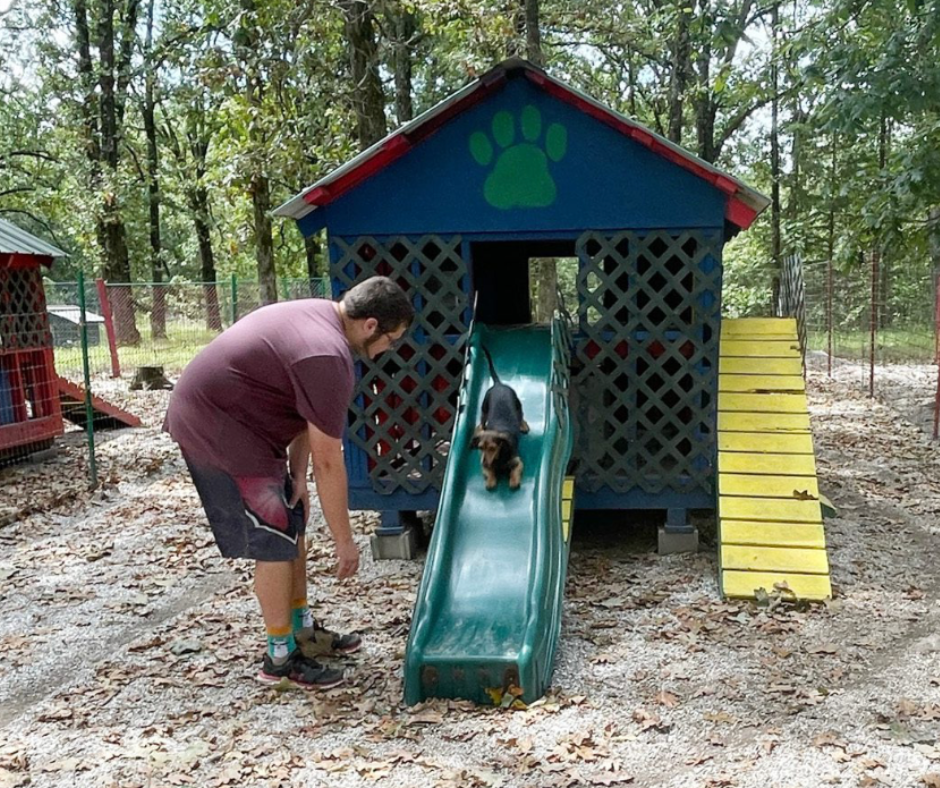
Earlier this year I stood on the property of a commercial dog breeding facility in Missouri and watched dogs run around and play in their yard. They weren’t pacing or spinning in small kennels and they weren’t cowering when we introduced ourselves for pets and play. It wasn’t like the kennels that have shaped too many of the experiences that I’ve had over the years through research and through in-person rescue. These dogs were running and playing in their yard because they had a yard and they could. It was just another day for them, even though things felt so different for us.
This was the third kennel we visited on trip and it was one that, on paper, would look all too suspicious to anyone who researches this industry. The same family operation changed hands and passed down the same business model, the same sales model and the same dogs- “probably”, advocates would surely think. I know I think that too, it is almost a reflex.
But what stood out immediately was what wasn’t there: raised wire flooring and rows of stacked cages, signs of a cold efficiency that has defined an industry and, along with it, generations of puppy mill awareness campaigns and outreach efforts. This kennel used to look similar to that though and pretty recently, too.
I know because I had been researching the former licensees at the property for years.

The grandparents of the current owner were the previous licensees at this address and had been USDA licensed for many years. Their retired kennel building still remained on the property, sitting as a reminder of the way the breeding world used to be (and still is in way too many cases). Just off of the gravel driveway you could see the old, rundown building sitting near the trees with the extended wire kennels popping out of the windows that were collecting years of old sticks and leaves that had fallen. The kennel had been empty for awhile now but you can imagine how many dogs called that their home, their existence, for years. I later asked about the history of this particular structure and found out that it was actually used for whelping, so it was primarily for the mamas and the newborn puppies.
For those who may be unaware- this kennel set up used to be thought of as the top of the line way to breed. Yes- at some point in the history of commercial dog breeding, “sundowner” type buildings with raised wire kennels were considered modern and the best way to do things (according to dog breeders that I’ve spoken with, these buildings have always been wildly not accepted by animal welfare organizations). Buildings like this were believed to be easier to clean and more sanitary because “the dogs would want to go to the bathroom where it would fall”. They could also choose whether or not to be inside (even if ‘outside’ meant standing on wire). For decades breeders were sold this idea that this operation was the right way, the professional way, the responsible way- even though this set up required that dogs live on wire flooring. But then things slowly changed as minds changed and as the public began demanding more humane standards of care. A new way was beginning to emerge.
Years before they would inevitably transfer the business to their grandson, this family became a pilot kennel for change (unbeknownst to me and allllll of my research I thought I had done at the time…) They helped to reimagine what commercial dog breeding could look like if canine welfare became the focus, instead of efficiency and profit. They redesigned kennels so the dogs could have meaningful indoor/outdoor access and play yards with structures that would keep them entertained. The dogs also had enrichment and socialization opportunities that many think couldn’t be possible inside of commercial operations. I know that I couldn’t believe it- until I saw it for myself.
The changes we are seeing aren’t just cosmetic updates though. They are philosophical ones. They aren’t the result of policy or legislation, they came from the hearts of people who knew the industry needed to change badly.
Through Bailing Out Benji’s field research program, I’ve visited roughly 30 commercial breeding kennels in 3 states- which is a small percentage of the total number of licensed breeders in the country. Some of the kennels were USDA licensed while some were state licensed. Some proudly advertised that they had a Canine Care Certified status and some were on their way to getting their first audit, while other kennel owners weren’t considering that program at this time. I’ve seen ingenuity and innovation that blew my mind on these trips and I’ve also seen things that I think need to still be improved upon. What each kennel has had in common though is that they represented real people, real families, and real moments in time inside an industry that is finally changing- slowly and unevenly, sure- but the industry is undeniably experiencing the very progress we’ve been demanding for decades.
I’ve seen the worst of the puppy mill industry and have loudly documented the suffering that still keeps me up at night. Our work has shut down the cruelest of operations and has been successful in getting the animals rescued. We are working every day to fix legislation that would improve welfare standards and we are working to shut off the sales pipeline for inhumane breeding operations. And now I’ve also stood in humane kennels, watching something better take shape- a future that I hoped for but never fully believed could happen.
What many people don’t quite realize is the reason behind why some breeders are choosing to change and do things differently than those who came before them. Yes, pressure matters. Regulation matters. Public scrutiny matters. And animal welfare absolutely matters. But time again and time again, breeders all over the midwest have told me the same quiet truth- they are changing because they were presented with a better way to do this work and they don’t want their kids or grandkids to inherit the shame of being a puppy mill.
They don’t want the next generation to be accused of running a cruel or inhumane dog breeding operation. They don’t want their family name tied to images of dogs living on wire floors or spending their entire lives in cages. They want to be able to honestly say that they did better when they knew better and that the puppies they are raising are coming from parents who are not suffering. The original kennel on this property didn’t become a pilot program to just care about better conditions for dogs today, they did it to help change animal welfare expectations now and in the future.
Around 2020, the grandson took over the property and dog breeding business from his family. With that, he also inherited the knowledge that there is a way that you can raise dogs with care and compassion so that you can be proud of your kennel.
So why does any of this matter to animal welfare advocates? Why does Bailing Out Benji care if there are kennel owners that are treating their dogs with compassion and humane care?
After being met with the history and the future of the dog breeding industry all at once on this rural Missouri property, it hit me- we could actually be two generations away from ending the worst puppy mill cruelty in the country if we allow space for that change to happen openly and authentically. We could see an end to raised wire flooring. We could see an end to the overbreeding of the parent dogs and more of a focus on their genetic health, as well as their physical and mental health. We could see an end to dogs merely existing within commercial kennels.
Just two generations.
If commercial kennels that are proud of their work could talk about it and advocate for change alongside us without becoming targets, we could see progress happen even faster. They would feel more confident in sharing best practices about animal welfare standards, while those breeders who refuse to change will be the ones who continue to be the focus of policy and awareness campaigns. When breeders who are meeting elevated standards are forced to hide what they are doing, improvement and growth are stunted. When every attempt at progress is met with suspicion or silence, the shadows grow deeper- and we all know that puppy mills thrive proudly in the shadows.
We could be two generations away from families choosing humane standards as the norm, if we acknowledge that it is a good thing. At present, we are living in a world where some children are growing up knowing that ethically breeding dogs means breeding responsibility, operating with transparency, and treating your dogs with humane care- no matter how many dogs you have. And I am so deeply grateful for the chance to witness and encourage this progress while it’s happening.
Through our field research I’ve realized that advocates also enable puppy mills through our words and messaging. When we label every kennel as a puppy mill, it allows for the worst to hide and do business as usual. It doesn’t leave any room for growth or progress and it definitely doesn’t encourage growth or progress. Why would breeders change their practices if we are going to call them puppy mills either way? As anti-puppy mill advocates we are sometimes so focused on ‘winning the war against puppy mills’ that we are unable to see progress like this as a win. For those of you who may feel uneasy with what I share, please remember that progress isn’t where we stop, progress is where we see how far we’ve come and acknowledge how much further left we have to go.
While I am standing in these yards and watching these dogs run, I am not thinking about policy, inspections, certifications, or labels. I am thinking about how good progress looks when it is on the smiling faces of dogs who live at kennels with families who take the time to love and care for them.
Just two generations.
I believe we can get there.
I know we can get there.